Model and Specific Measurements
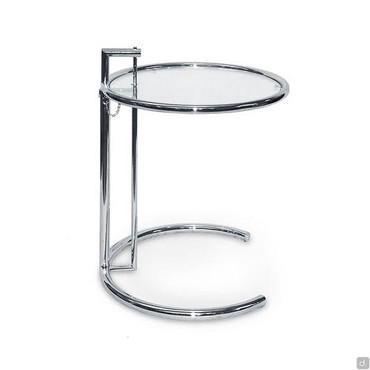
cm Ø 41 / 51 h.52: circular floor base cm Ø 27.
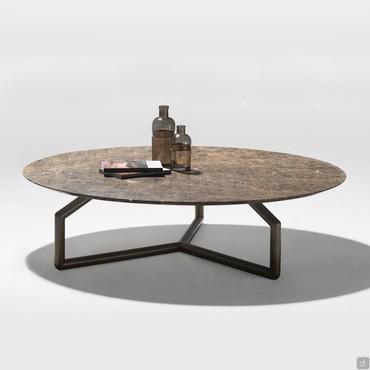
cm Ø 60 / 70 / 80 / 90 h.41: circular floor base cm Ø 43, circular element under the table top cm Ø 50.
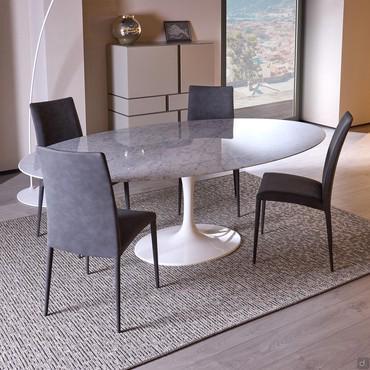
cm 105 x 70 / 120 x 75 / 160 x 85 h.41: elliptical floor base cm 56 x 41, elliptical element under the table top cm 60 x 36.
Specific Materials
Liquid laminate top: made of a MDF surface, 2,5 cm thick, coated with semi-matt liquid laminate, a particularly hard coating thanks to the presence of glass microspheres that provide greater scratch resistance and lower liquid absorption.
Laminam ceramic top: made of 2 cm thick ceramic. The patterns reproduce, in addition to the white and black version, shades and grains typical of marble, preserving the beauty of the natural stone but at the same time by guaranteeing the resistance of ceramic. The ceramic is a very practical material and resistant for everyday use: easy to clean, it is stain and scratch resistant.
Marble top: made of natural marble, 2 cm thick finished with a glossy or matt coating. Elegant material characterised by open grains that sometimes might present resin-based plastering that make the surface even, in case of small superficial roughness, by guaranteeing at the same time a greater structural resistance. Being a natural stone, sometimes more than million years old, the top can not be "perfect": each slab is different from the other with grains that can be lighter or definitely marked, according to the cut and polishing. It might present natural imperfections, a typical feature of marbles and cannot be considered a defect. Marble tops are naturally porous: a polyester protective treatmen hides this feature to the touch while leaving visible all the natural details of the piece.
Further Information:
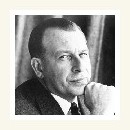 Eero Saarinen is the son of the famous Finnish architect and prime minister of the "Cranbrook Academy of Arts", Eliel Saarinen. Born in Helsinki, he moved to the United States with his family in 1923.
After studying sculptural art in Paris (1929-1930), he continued his architectural studies at Yale, where he graduated in 1934. Obtaining a scholarship, he was able to travel around Europe and develop his own style (1934-1935). Once back to the USA he started teaching at the "Cranbook Academy of Arts".
In 1937 he started a collaboration with Charles Eames, who pushed him to develop forefront furnishing elements which have been awarded prizes on various occasions at the "Organic Design in Home Furnishings". He worked in his father's agency until Eliel's depth in 1950. His biggest architectural project remains the famous TWA terminal of "Kennedy" airport, in New York.